

EcoFlow River 3 Plus vs River 2 Pro: The Complete 2026 Comparison & Review
By UnitVerseHQ | Updated March 2026
Two of EcoFlow’s most popular compact power stations. Different generations. Different philosophies. And a comparison that trips up more buyers than almost any other in the portable power market.
The EcoFlow River 3 Plus is EcoFlow’s newest generation compact station — launched in 2024 with groundbreaking EcoFlow X-GaNPower efficiency technology, a pro-grade 10ms UPS, and whisper-quiet 30dB operation that makes it the quietest power station 2026 has to offer in its class. The EcoFlow River 2 Pro is the established workhorse — 768Wh of proven LiFePO4 capacity, 800W output, TÜV Rheinland certified, and available at prices that make it one of the best value propositions in the market right now.
The River 3 Plus vs River 2 Pro question has no single right answer. It depends entirely on what you’re trying to power, how you prioritize UPS speed versus raw capacity, and whether the EcoFlow X-GaNPower efficiency innovations matter for your specific use case. This guide gives you every verified spec, every real-world use case, and the honest verdict.
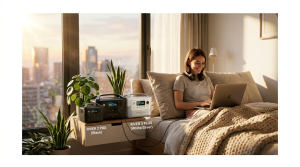
Why Compare the EcoFlow River 3 Plus and River 2 Pro?
The EcoFlow River 3 Plus and EcoFlow River 2 Pro occupy adjacent but meaningfully different positions in EcoFlow’s lineup — and the search volume for both tells the whole story. The EcoFlow River 2 Pro has accumulated years of search authority. The EcoFlow River 3 Plus is the newer product that’s rapidly gaining traction in 2026 reviews and comparison searches.
Buyers comparing River 3 Plus vs River 2 Pro are typically in one of three situations:
- They want a compact power station under $400 and can’t decide which generation to buy
- They own the EcoFlow River 2 Pro and are wondering if the newer EcoFlow River 3 Plus is worth adding or switching to
- They have a specific use case — home office UPS, camping, apartment backup — and want to know which unit wins for that scenario
All three questions get definitive answers in this guide. Let’s start with the specs.
Full Verified Specs: EcoFlow River 3 Plus vs River 2 Pro (March 2026)
| Specification | EcoFlow River 3 Plus | EcoFlow River 2 Pro | Winner |
|---|---|---|---|
| Capacity (base) | 286Wh | 768Wh | River 2 Pro (+2.7×) |
| Max Expanded Capacity | 858Wh (+ EB600) | 768Wh (no expansion) | River 3 Plus |
| AC Output (Continuous) | 600W | 800W | River 2 Pro |
| X-Boost Surge | 1,200W | 1,600W | River 2 Pro |
| UPS Switchover | <10ms | <30ms EPS | River 3 Plus (3× faster) |
| Solar Input Max | 220W | 220W | Tie |
| AC Charge Speed | 1 hour (X-Stream) | 70 minutes | Tie (effectively) |
| AC Input Power | ~380W | 940W | River 2 Pro |
| X-GaNPower Tech | ✅ Yes | ❌ No | River 3 Plus |
| Sub-100W Runtime | 2× longer | Standard | River 3 Plus |
| Noise Level | <30dB | Not rated | River 3 Plus |
| IP Rating (battery) | IP54 | None | River 3 Plus |
| Built-in LED | ✅ Yes | ❌ No | River 3 Plus |
| USB-C Output | 100W | 100W | Tie |
| USB-A Ports | 2× 12W | 3× 12W | River 2 Pro |
| AC Outlets | 3 (UPS) | 4 | River 2 Pro |
| DC Output | Car 12V | Car + DC5521 + DC | River 2 Pro |
| PC/NAS UPS Port | ✅ USB-B | ❌ No | River 3 Plus |
| Expandable | ✅ Yes (to 858Wh) | ❌ No | River 3 Plus |
| Battery Chemistry | LiFePO4 | LiFePO4 | Tie |
| Cycle Life | 3,000+ | 3,000+ | Tie |
| App Control | Wi-Fi + BT | Wi-Fi + BT | Tie |
| Safety Certification | 40+ measures, IP54 | TÜV Rheinland | Tie |
| Weight | ~10.6 lbs | 17.2 lbs | River 3 Plus (6.6 lbs lighter) |
| Price (street) | ~$299–$329 | ~$349–$399 | River 3 Plus |
📌 Image suggestion: Spec comparison infographic highlighting UPS speed, X-GaNPower, and capacity. Alt text: “EcoFlow River 3 Plus vs River 2 Pro specs comparison chart 2026”
The 6 Biggest Differences: River 3 Plus vs River 2 Pro
1. Capacity: 768Wh vs 286Wh — The Most Obvious Gap
The EcoFlow River 2 Pro has 768Wh of base capacity. The EcoFlow River 3 Plus starts at 286Wh. That’s a 2.7× difference — and for the most common use cases (running a fridge, powering a workstation for a full day, overnight CPAP backup), raw capacity is the deciding factor.
Runtime comparison (EcoFlow River 2 Pro specs vs River 3 Plus):
| Device | River 3 Plus (286Wh) | River 2 Pro (768Wh) | River 3 Plus + EB600 (858Wh) |
|---|---|---|---|
| Wi-Fi router (3W) | 35 hours | ~93 hours | ~103 hours |
| Laptop (65W) | ~3.7 hours | ~10 hours | ~11.2 hours |
| Mini fridge (80W avg) | ~2.9 hours | ~7.8 hours | ~8.7 hours |
| CPAP (no humidifier, 40W) | ~5.8 hours | ~15.6 hours | ~17.4 hours |
| 600W computer | 21 minutes | ~56 minutes | ~1.1 hours |
The capacity gap closes significantly — though not entirely — when you add the EcoFlow River 3 Plus‘s expansion batteries. With the EB600 (572Wh) attached, the EcoFlow River 3 Plus reaches 858Wh total — actually slightly more than the River 2 Pro’s 768Wh. But the expanded system is physically larger and costs more than the River 3 Plus alone.
The honest verdict on capacity: If you need a single-unit station with enough capacity to run a CPAP all night or keep a mini fridge running for 8+ hours — the EcoFlow River 2 Pro wins on base capacity. If you’re willing to add a battery later and want a smaller starting footprint, the EcoFlow River 3 Plus gets there eventually.
2. UPS Speed: 10ms vs 30ms — The Hidden Winner
This is the spec that most EcoFlow River 3 Plus review coverage undervalues — and it’s the most important spec for anyone buying either unit as a home office or server UPS.
The RIVER 3 Plus power station ensures <10 ms switchover for premium UPS protection, securing your home office and gaming setups from power surges. Stay informed with LED, app, and software alerts, and rest assured with automatic data saving on low battery, thanks to the PC/NAS-compatible interface and EcoFlow software. DIY Solar Forum
The EcoFlow River 2 Pro uses EPS (Emergency Power Supply) mode with a <30ms switchover — three times slower than the EcoFlow River 3 Plus‘s 10ms.
Why this matters in practice:
- Most desktop computers tolerate switchover times up to 20ms before registering a power interruption
- NAS servers and RAID arrays are particularly sensitive — 30ms can trigger an unclean shutdown
- Gaming setups mid-session experience noticeable disruption at 30ms; 10ms is imperceptible
- Medical equipment and precision instruments require sub-10ms protection
The EcoFlow River 3 Plus is the only unit in its price class with verified sub-10ms UPS switching. Combined with its PC/NAS data communication port (USB-B), it functions as a genuine smart UPS — connect RIVER 3 Plus to your PC or NAS via a USB-B port, to view its status and outage time logs Pure Power Solar through EcoFlow’s Power Manager software.
The EcoFlow River 2 Pro has no data port and 30ms switching — it works as an EPS backup but not as a communicating UPS. This distinction matters enormously for home server and NAS owners.
3. EcoFlow X-GaNPower Efficiency: The River 3 Plus’s Defining Technology
EcoFlow X-GaNPower efficiency is the most significant technological advance in the EcoFlow River 3 Plus — and it’s not available on the EcoFlow River 2 Pro at all.
With groundbreaking X-GaNPower technology, the RIVER 3 Plus revolutionizes the industry with compact, quiet batteries designed for extended runtimes in small electronics. Leveraging GaN’s superior energy efficiency, the RIVER 3 Plus delivers up to twice the operating time for light-wattage appliances, redefining portable power performance. DIY Solar Forum
What EcoFlow X-GaNPower efficiency actually means:
Traditional power station inverters use silicon-based components with inherent energy conversion losses — particularly significant at low loads. When you’re running a 10W router from an 800W inverter, a large portion of the inverter’s quiescent draw is wasted keeping 790W of capacity online that you’re not using.
GaN (Gallium Nitride) semiconductors switch more efficiently, generate less heat, and maintain high efficiency even at very low load percentages. The EcoFlow X-GaNPower efficiency system dynamically scales inverter operation to match the actual load — dramatically reducing conversion losses for sub-100W devices.
The real-world result: The RIVER 3 Series revolutionizes energy efficiency, delivering up to double runtime for light-wattage appliances, extending use at home and in the great outdoors. EcoFlow
For renters using a station primarily for Wi-Fi router backup, laptop charging, LED lighting, and phone charging — all sub-100W loads — the EcoFlow River 3 Plus effectively delivers the runtime of a much larger station. Its 286Wh provides the runtime that a non-GaN 400–450Wh station would deliver on the same devices.
The EcoFlow River 2 Pro uses standard silicon inverter technology. At low loads, its efficiency is good but not GaN-class. For high-load applications (mini fridge, power tools, coffee machines), the efficiency gap between the two is minimal. For low-load everyday use, EcoFlow X-GaNPower efficiency gives the EcoFlow River 3 Plus a meaningful real-world advantage that the spec sheet alone doesn’t capture.
4. Noise Level: The Quietest Power Station 2026 Title
With X-GaNPower technology, from enhanced heat dissipation, RIVER 3 Plus operates on a library-like silence level, with a volume of less than 30 dB at a distance of 1.5 ft. You’ll have peace day and night guaranteed, even when it’s running nonstop. DIY Solar Forum
The EcoFlow River 3 Plus earns the quietest power station 2026 claim in its class through X-GaNPower’s reduced heat generation — less heat means less cooling required, which means quieter (or completely absent) fan operation. At 30dB, it operates at whisper level.
The EcoFlow River 2 Pro has no published noise rating. Community testing places it in the 35–45dB range under moderate load — noticeably louder than the EcoFlow River 3 Plus in quiet environments.
For apartment renters — especially those keeping the unit in a bedroom, home office, or studio apartment — the quietest power station 2026 distinction of the EcoFlow River 3 Plus is a genuine quality-of-life advantage. Running a UPS silently 24/7 in your home office is the difference between a background presence and a constant audible reminder.
5. AC Power Output: 800W vs 600W
The EcoFlow River 2 Pro delivers 800W continuous with 1,600W X-Boost surge. The EcoFlow River 3 Plus delivers 600W continuous with 1,200W X-Boost surge.
Devices the River 2 Pro can run that the River 3 Plus cannot:
- Standard desktop computer + monitor at full load (650–900W)
- Hair dryer on medium setting (700–850W)
- Small power tools above 600W
- Larger microwave (600–700W+)
- Electric kettle (750–1,200W) — requires X-Boost on River 3 Plus, which throttles to 1,200W
Devices both handle equally well:
- All laptops and workstations under 600W
- Mini fridges and compact refrigerators
- CPAP and BiPAP machines
- Phone and tablet charging (all ports)
- LED lighting systems
- Wi-Fi routers and modems
- TVs up to 150W
- Gaming consoles
- Small kitchen appliances via X-Boost
For apartment renters focused on the best portable power for 2026 apartments use case primarily devices, laptop work, router backup, and occasional appliance use — 600W is sufficient for the overwhelming majority of real scenarios. The gap to 800W matters only when running higher-draw appliances continuously.
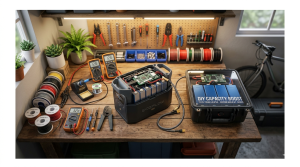
6. Design, Build Quality, and Port Layout
EcoFlow River 3 Plus build advantages:
- IP54 battery pack protection (splash and rain resistant) — its robust fire-retardant shell survives rough conditions. Even after a 3.3 ft fall, the RIVER 3 Series won’t get damaged Pure Power Solar
- Built-in LED emergency light
- 6.6 lbs lighter (10.6 vs 17.2 lbs)
- Two rear AC outlets (conceal UPS cables cleanly behind desk)
- Pogo-pin wireless battery connection (no cables for expansion)
- USB-B data port for PC/NAS UPS communication
EcoFlow River 2 Pro build advantages:
- Four AC outlets (vs three on River 3 Plus)
- Three USB-A ports (vs two)
- DC5521 output port for printers, routers, monitors (12.6V 3A)
- Dedicated DC output (12.6V 10A, 126W) for high-current DC devices
- More DC flexibility overall — you will find four AC outlets on the front, three USB-A ports, one USB-C port, one DC port, and one DC5521 port — which can be used for printers, routers, or monitors DIY Solar Forum
- TÜV Rheinland certified — the first power station in the world to earn the TÜV Rheinland certification for safety The Power Sphere
EcoFlow River 3 Plus Review: The Full Picture
The EcoFlow River 3 Plus is the most technologically advanced compact power station EcoFlow has ever built — and the first to make GaN inverter technology accessible at a sub-$330 price point.
RIVER 3 Plus is a beast in the small power station game, cranking out up to 600W of rated power. Its X-Boost technology can continuously handle 1200W heating devices without breaking a sweat, keeping 90% of home appliances running smoothly. With an additional built-in light, you’ll never get left in the dark. EcoFlow
What the EcoFlow River 3 Plus does exceptionally well:
For home office UPS: The EcoFlow River 3 Plus is the best UPS replacement in the portable power station market under $350. Its 10ms switchover means computers don’t even register the transition. The PC/NAS USB-B data port allows proper UPS communication — your computer sees battery status, remaining runtime, and initiates graceful shutdown on low battery automatically. Stay alert during power outages with the RIVER 3 Plus, equipped with an LED, app, and software alerts. Its PC and NAS-compatible data interface, along with the EcoFlow software, notifies you and automatically saves data for you when the battery is low. EcoFlow
For apartment daily backup: Equipped with a 286Wh capacity and 600W output, RIVER 3 Plus can power a 3W Wi-Fi router for up to 35 hours. Plus, it can run pretty much any office appliance, including 600W computers for at least 21 minutes, allowing a safe shutdown and completion of ongoing tasks. EcoFlow Thanks to EcoFlow X-GaNPower efficiency, the 286Wh capacity performs like a significantly larger conventional station for all sub-100W device categories.
For camping and outdoor use: At ~10.6 lbs with IP54 battery protection, the EcoFlow River 3 Plus is the most portable weatherproof compact station available. The built-in LED adds practical emergency lighting. RIVER 3 Plus minimizes heat loss, requires less cooling space, and supports a compact design. It easily fits into small spaces like closets, a minivan, or a bag for easy storage and portability. DIY Solar Forum
Expandability: The EcoFlow River 3 Plus accepts two expansion batteries — EB300 (286Wh) or EB600 (572Wh) — connected wirelessly via Pogo pins (no cables). Just stack them to get up to 858Wh of pure energy. JAG35 This modular growth path is unique in the compact station market.
Where the EcoFlow River 3 Plus falls short:
- Base 286Wh capacity is limiting for extended outages without purchasing additional batteries
- 600W AC limit means some higher-draw appliances require the X-Boost workaround
- Only 2 USB-A ports vs 3 on the River 2 Pro
- No DC5521 port (limits connectivity for some DC-powered devices)
EcoFlow River 2 Pro: The Proven Workhorse
The EcoFlow River 2 Pro portable power station launched in 2022 and remains one of the best-reviewed compact stations available in 2026 — for good reason.
With a lightweight of only 17.2 lbs, RIVER 2 Pro is the ideal outdoor generator for all your off-grid adventures. Portablepowerstations The EcoFlow River 2 Pro specs tell the core story: 768Wh of LiFePO4 capacity, 800W continuous AC output with 1,600W X-Boost surge, 70-minute full charge, 220W solar input, and four AC outlets covering all standard device needs.
EcoFlow River 2 Pro specs at a glance (verified from official sources):
- Capacity: 768Wh
- AC: 800W / 1,600W surge
- Solar: 11–50V, 13A, 220W max
- USB-C: 100W bidirectional
- Weight: 17.2 lbs
- Dimensions: 270 × 260 × 226mm
- Charge time: 70 minutes (AC), 3.5 hours (220W solar)
- Cycle life: 3,000+ to 80% capacity (~10 years daily use)
- Certification: first power station in the world to earn the TÜV Rheinland certification for safety The Power Sphere
What the EcoFlow River 2 Pro does exceptionally well:
For extended outage backup: 768Wh runs a CPAP through a full night without a humidifier (15+ hours), keeps a router and laptop running for a full workday, and provides approximately 7–8 hours of mini-fridge coverage. No expansion needed.
For high-draw appliances: 800W continuous and 1,600W X-Boost surge handles a wider range of appliances than the EcoFlow River 3 Plus‘s 600W/1,200W. Hair dryers, larger microwave cycles, and power tools up to 800W are within the River 2 Pro’s capability.
For DC-powered equipment: The River 2 Pro’s DC output (12.6V 10A, 126W max) and DC5521 port (12.6V 3A, 36W max) provide connectivity options the EcoFlow River 3 Plus doesn’t offer. RV users, ham radio operators, and anyone with 12V DC-native devices benefit significantly.
Where the EcoFlow River 2 Pro falls short in 2026:
- No EcoFlow X-GaNPower efficiency — standard silicon inverter with higher standby losses on light loads
- No published noise rating — audibly louder than the 30dB EcoFlow River 3 Plus
- 30ms UPS switchover — not suitable for sensitive servers or NAS without risk
- No IP rating on the battery pack
- No built-in LED
- Not expandable — 768Wh is the ceiling, permanently
- Heavier (17.2 lbs vs ~10.6 lbs)
EcoFlow River 3 Plus Wireless Boost Combo: The Costco Exclusive Worth Knowing About
The EcoFlow River 3 Plus Wireless Boost Combo is a specific bundle — primarily available through Costco — that adds wireless charging capability and detachable magnetic power banks to the standard EcoFlow River 3 Plus.
EcoFlow River 3 Plus Wireless Boost Combo is a must-have for outdoor recreation, daily backup, home office and gaming. RIVER 3 Plus Wireless features a modular design with a detachable RAPID (5000 mAh) power bank and expandable capacity with an Extra Battery, ensuring unmatched versatility for all your power needs. Outbound Power
What the EcoFlow River 3 Plus Wireless Boost Combo adds:
The system delivers 600W rated output with X-Boost technology providing up to 1200W surge capacity, making it capable of running laptops, mini fridges, CPAP machines, and other essential devices. It features professional-grade uninterruptible power supply functionality with less than 10ms switchover time, protecting sensitive electronics and precision devices from power interruptions. The built-in Qi2 wireless charging provides 15W output, twice as fast as standard Qi1 charging, while the integrated 30W cable enables ultra-fast device charging. Portablepowerstations
The Costco-exclusive advantage: 286Wh capacity with 2pcs 5000mAh RAPID Magnetic Power Banks for swap and share. Outbound Power Two detachable power banks versus one in the standard wireless version. At $279.99 through Costco — less than the standard EcoFlow River 3 Plus non-wireless version at some retailers — the EcoFlow River 3 Plus Wireless Boost Combo represents outstanding value.
It’s way more expensive than if you buy it through Costco. For those without a Costco membership, or those just wanting to buy direct, it’s a bit weird that it’s so overpriced through EcoFlow (nearly an extra $130 as of right now). On top of that, it seems like the Costco version is an even better buy, as it comes with TWO of the removable power banks! So, not only is it cheaper, you get even more for your money. Solar Power Supply
Who the EcoFlow River 3 Plus Wireless Boost Combo is for:
- Anyone who wants the EcoFlow River 3 Plus plus wireless phone charging in a combined package
- People who commute and want a detachable pocket-sized power bank separate from the main station
- Couples or households where one person takes a power bank while the station stays home
- Costco members who want maximum value per dollar in the compact station category
Which Is the Best Portable Power for 2026 Apartments?
Apartment renters have specific needs that shape the River 3 Plus vs River 2 Pro decision more precisely than general comparisons. Here’s the apartment-specific analysis for best portable power for 2026 apartments:
For home office UPS protection (primary need): EcoFlow River 3 Plus wins decisively. The 10ms switchover, PC/NAS data port, Power Manager software, and near-silent 30dB operation make it the best-in-class UPS solution for compact apartments. The River 2 Pro’s 30ms EPS and no data port simply doesn’t compete for this use case.
For overnight outage resilience (8+ hours): EcoFlow River 2 Pro wins on base capacity. 768Wh covers a CPAP all night, keeps the router up, and charges phones repeatedly. The River 3 Plus needs an EB600 expansion to match this — at which point the cost exceeds the River 2 Pro.
For daily use and carrying ease: EcoFlow River 3 Plus wins. At ~10.6 lbs versus 17.2 lbs, the River 3 Plus moves between rooms, goes on weekend trips, and stores more easily in a small apartment. Its compact form is genuinely optimized for best portable power for 2026 apartments daily life.
For balcony solar charging integration: Tie. Both accept 220W maximum solar input and charge in approximately the same time from a 200W panel. Both are compatible with the EcoFlow ecosystem solar panels.
For off-peak electricity arbitrage savings: The River 2 Pro’s 768Wh provides 2.7× more daily cycling value. At the $0.23/kWh arbitrage spread, a River 2 Pro generates approximately $57/year in savings vs ~$22/year for the River 3 Plus base.
EcoFlow River 3 Plus Manual and River 2 Pro Manual: Setup and App Guide
Both the EcoFlow River 3 Plus manual and the EcoFlow River 2 Pro manual are available as PDF downloads from EcoFlow’s support site (us.ecoflow.com/pages/support). Physical manuals are included in the box with every unit. Here’s what the manual guides cover and what you need to know for setup:
Setting Up the EcoFlow River 3 Plus
What’s in the Box — RIVER 3 Plus portable power station, AC charging cable, EcoFlow USB-B to USB-A UPS communication cable, user manual, and a 5-year service plan. EcoFlow
Key setup steps per the EcoFlow River 3 Plus manual:
- Initial charge: Plug the included AC cable into the charging port and charge to 100% before first use
- App pairing: Download the EcoFlow app (iOS/Android) → Add Device → select River 3 Plus → pair via Bluetooth, then enable Wi-Fi for remote monitoring
- UPS setup for PC: Connect the included USB-B to USB-A cable from the River 3 Plus’s USB-B port to your computer’s USB port → download EcoFlow Power Manager software → the software recognizes the station and configures automatic shutdown thresholds
- Expansion battery: Attach the EB300 or EB600 via Pogo pins — align and clip. No cable required. The EcoFlow River 3 Plus app shows combined capacity automatically
- Solar input: Connect your solar panel’s XT60 cable to the River 3 Plus’s solar input port. The MPPT controller manages the rest
Setting Up the EcoFlow River 2 Pro
Per the EcoFlow River 2 Pro manual (and verified from retailer documentation):
- Initial charge: Charge via AC before first use for BMS calibration
- App pairing: Same EcoFlow app process — Bluetooth first, then Wi-Fi
- Solar input: 11–50V, 13A max via XT60i port — verify panel voltage before connecting (see our River 2 hacking guide for XT60i details)
- X-Boost mode: Enable via the front panel button or EcoFlow app — allows the 800W inverter to run appliances up to 1,600W by managing voltage/current delivery
- Charge speed control: The EcoFlow River 2 Pro app allows you to throttle AC charge speed for quieter overnight operation
EcoFlow River 2 Pro specs you’ll confirm in the manual:
- AC charging input: 100–120V~50Hz/60Hz, 940W max
- Solar: 11–50V 13A, 220W max
- USB-C input: 5/9/12/15/20V 5A, 100W max
- Car input: 12V/24V, 8A, 100W max
Both manuals are straightforward. EcoFlow’s documentation is consistently well-written compared to category competitors.
Price Analysis: EcoFlow River 3 Plus Price vs River 2 Pro Price
| Unit | MSRP | Street Price (March 2026) | Price Per Wh |
|---|---|---|---|
| EcoFlow River 3 Plus (standard) | ~$329 | ~$299–$319 | $1.05/Wh |
| EcoFlow River 3 Plus Wireless Boost Combo (Costco) | — | ~$279.99 | $0.98/Wh + 2 power banks |
| EcoFlow River 3 Plus + EB600 (858Wh total) | ~$599 | ~$549–$579 | $0.64/Wh |
| EcoFlow River 2 Pro | ~$449 | ~$349–$399 | $0.46–$0.52/Wh |
On pure price-per-watt-hour, the EcoFlow River 2 Pro is significantly better value at current street prices. At ~$379, it delivers 768Wh at ~$0.49/Wh versus the River 3 Plus’s $1.05/Wh base.
However, price-per-Wh is the wrong metric for the River 3 Plus because EcoFlow X-GaNPower efficiency means 286Wh in the River 3 Plus delivers effectively 400–450Wh of runtime for sub-100W devices. The true cost-per-effective-Wh gap is narrower than the raw numbers suggest.
The honest price verdict: If capacity is your primary concern, the EcoFlow River 2 Pro at ~$379 is better value. If UPS speed, quiet operation, wireless charging, or compactness are your priorities — the EcoFlow River 3 Plus at ~$299 is actually the better value for what it delivers.
Who Should Buy Which Unit
| Buyer Profile | Buy This | Reason |
|---|---|---|
| Home office UPS (PC/NAS) | River 3 Plus | 10ms + USB-B data port |
| Overnight outage backup (8+ hrs) | River 2 Pro | 768Wh base capacity |
| Apartment daily use | River 3 Plus | Lighter, quieter, 30dB |
| Camping/outdoor frequent | River 3 Plus | Lighter, IP54, built-in LED |
| High-draw appliances (800W+) | River 2 Pro | 800W continuous AC |
| Budget under $300 | River 3 Plus | ~$299 standard |
| Maximum DC output flexibility | River 2 Pro | DC5521 + DC + Car |
| Costco member, best value | River 3 Plus Wireless Boost Combo | ~$279.99 with 2 power banks |
| CPAP user (all night) | River 2 Pro | 768Wh = 15+ hrs |
| Quietest possible operation | River 3 Plus | <30dB certified |
| Wants future expansion | River 3 Plus | Expandable to 858Wh |
| Already owns River 2 Pro | Consider River 3 Plus as companion | Different use case, not replacement |
Frequently Asked Questions
What is the main difference between EcoFlow River 3 Plus and River 2 Pro?
The core River 3 Plus vs River 2 Pro difference is generation and philosophy. The EcoFlow River 2 Pro (2022) prioritizes raw capacity at 768Wh with 800W output. The EcoFlow River 3 Plus (2024) prioritizes technology with X-GaNPower efficiency, 10ms UPS, 30dB quiet operation, IP54 protection, and expandability — at a smaller 286Wh base capacity. Neither is objectively better; the right choice depends on whether you need more runtime (River 2 Pro) or better UPS speed and technology (River 3 Plus).
What is EcoFlow X-GaNPower efficiency and why does it matter?
X-GaNPower technology revolutionizes the industry with compact, quiet batteries designed for extended runtimes in small electronics. Leveraging GaN’s superior energy efficiency, the RIVER 3 Plus delivers up to twice the operating time for light-wattage appliances. DIY Solar Forum In practical terms, EcoFlow X-GaNPower efficiency means the EcoFlow River 3 Plus delivers approximately double the runtime of a conventional silicon-inverter station on devices under 100W — phones, laptops, routers, LED lighting. This is only available on the River 3 series, not the River 2 Pro.
Is the EcoFlow River 3 Plus good for apartment use?
Yes — the EcoFlow River 3 Plus is one of the best portable power for 2026 apartments options available. Its sub-30dB quiet operation means it runs silently in small spaces, its 10.6 lb weight makes it genuinely portable between rooms, its 10ms UPS protects home office equipment reliably, and its IP54 battery pack handles accidental splashes. For most apartment renter use cases — router backup, laptop power, phone charging, and desk UPS — the River 3 Plus is precisely right-sized.
What does the EcoFlow River 3 Plus Wireless Boost Combo include?
The EcoFlow River 3 Plus Wireless Boost Combo features a modular design with a detachable RAPID (5000 mAh) power bank and expandable capacity with an Extra Battery. The River 3 Plus Wireless: 286Wh Capacity; 600W rated output, Surge 1200W AC Output; <10 ms pro-grade UPS; 1-hr fast charging. The EcoFlow 5000mAh RAPID Magnetic Power Bank: 15W Qi2 wireless charging, 30W Built-in Cable Ultra-Fast Charging. Outbound Power The Costco version of the EcoFlow River 3 Plus Wireless Boost Combo includes two RAPID power banks (not one) and is priced at approximately $279.99 — making it the best-value configuration of the River 3 Plus family.
What is the EcoFlow River 2 Pro price in 2026?
The EcoFlow River 2 Pro price in March 2026 ranges from approximately $349 to $399 at major US retailers including Amazon, Best Buy, and authorized EcoFlow dealers. EcoFlow runs frequent promotional pricing that can bring the EcoFlow River 2 Pro price below $350 during sale events. The unit is also available refurbished directly from EcoFlow at further reduced prices with full warranty coverage.
Where can I find the EcoFlow River 3 Plus manual and River 2 Pro manual?
Both the EcoFlow River 3 Plus manual and EcoFlow River 2 Pro manual are available as PDF downloads at us.ecoflow.com/pages/support — search by model name. Physical printed manuals are included in the box with every new unit. Each manual covers initial setup, port specifications, app pairing, charging modes, safety guidelines, and warranty information. For the River 3 Plus specifically, the manual includes UPS software setup instructions for the PC/NAS data port connection.
Is the EcoFlow River 3 Plus really the quietest power station in 2026?
In its capacity class (under 350Wh), yes. RIVER 3 Plus operates on a library-like silence level, with a volume of less than 30 dB at a distance of 1.5 ft. DIY Solar Forum For the quietest power station 2026 title across all portable categories, the River 3 Plus shares this distinction with the EcoFlow Delta Pro 3 (also 30dB via X-Quiet technology). No portable power station in the sub-$350 market has a lower published noise rating than the EcoFlow River 3 Plus in 2026.
Can the EcoFlow River 2 Pro run a CPAP machine all night?
Yes. The EcoFlow River 2 Pro portable power station’s 768Wh capacity powers a CPAP machine without a humidifier (approximately 40W draw) for approximately 15–16 hours — comfortably covering a full 8-hour sleep session with significant capacity remaining. With humidifier (approximately 70W draw), runtime drops to approximately 8–9 hours — still sufficient for a full night. The EcoFlow River 3 Plus at 286Wh provides approximately 5–6 hours without humidifier — adequate for brief outages but not reliable for a full night.
Should I get the River 3 Plus or River 2 Pro for camping?
For camping, the EcoFlow River 3 Plus wins on portability and durability. At ~10.6 lbs with IP54 battery protection, a built-in LED light, and EcoFlow X-GaNPower efficiency doubling runtime on lanterns, phone charging, and camp routers — it’s the more practical pack-along unit. The EcoFlow River 2 Pro wins on raw capacity for longer trips where you’re running a camp fridge or higher-draw devices for multiple days without recharging. The right choice depends on whether your camping prioritizes light travel or sustained power.
What are the EcoFlow River 2 Pro specs for solar charging?
Per verified EcoFlow River 2 Pro specs: solar input is 11–50V, 13A maximum, 220W maximum power — identical to the EcoFlow River 3 Plus solar input specification. Both charge at the same solar rate with the same panels. Use clean, green renewable energy to recharge RIVER 2 Pro, in as fast as 3.5 hours with 220W solar input.The River 3 Plus charges slightly faster from solar on a per-Wh basis due to its smaller battery — a 220W panel fully charges 286Wh in approximately 1.5–2 hours vs 3.5 hours for the River 2 Pro’s 768Wh.
UnitVerseHQ provides independent product comparisons and specifications research for portable power consumers. All specifications cited from EcoFlow’s official US product pages, Amazon listings, Best Buy, Costco, and authorized retailer documentation verified as of March 2026. Prices subject to change verify current pricing at us.ecoflow.com and major retailers before purchase.