
How to Charge EcoFlow DELTA 2 Faster: All 8 Methods Ranked by Speed (2026)
By UnitVerseHQ | Updated March 2026
Your EcoFlow DELTA 2 is sitting at 12% battery. You need it full in the next two hours. Do you know which charging method gets you there fastest — and which ones are wasting your time?
Most DELTA 2 owners use one charging method: the AC wall outlet. Some know about solar. A smaller group uses the car port. Almost nobody knows there are eight distinct ways to charge the DELTA 2, that some of them can be stacked simultaneously for speeds the manual doesn’t advertise, and that one method — the cigarette lighter port — is so slow it’s practically useless for a full charge.
This is the DELTA 2 charging speed bible. Every method. Every watt. Every minute. Ranked, timed, and explained for three audiences: van lifers who need how to charge Delta 2 while driving, overlanders who depend on solar, and road trippers who want the fastest possible charge between stops. All verified from EcoFlow’s official specs, user manuals, and independent third-party testing.
The Master Speed Ladder: All 8 DELTA 2 Charging Methods Ranked
This table is the core of the entire guide. Everything else is the explanation.
| Rank | Method | Input Power | 0–80% Time | 0–100% Time | Cost | Best Situation |
|---|---|---|---|---|---|---|
| 🥇 1st | X-Stream AC + 500W Solar Stack | ~1,700W | ~38 min | ~58 min | Included AC cable + panels | Campsite with shore power |
| 🥈 2nd | X-Stream AC Wall Only | 1,200W | 50 min | 80 min | Included | Home / RV shore power |
| 🥉 3rd | Smart Generator (Dual Fuel) | 1,800W | ~35 min | ~55 min | +$499 generator | Extended blackout, no grid |
| 4th | 800W Alternator Charger + Solar | ~1,020W | ~60 min | ~90 min | +$249–$299 charger | Driving with roof solar |
| 5th | 800W Alternator Charger Only | 800W | ~78 min | ~90 min | +$249–$299 charger | Driving between campsites |
| 6th | 500W Alternator Charger | 500W | ~2.1 hrs | ~2.3 hrs | +$149–$179 charger | Driving, budget option |
| 7th | 500W Solar (400W panel ideal) | Up to 500W | ~3 hrs | ~3.5 hrs | Cost of panels | Off-grid daylight charging |
| 8th | 220W Solar (single panel) | 220W | ~5.5 hrs | ~6.5 hrs | Cost of panel | Budget solar setup |
| 9th | USB-C PD 100W | 100W | ~10.6 hrs | ~11.4 hrs | Already owned | Hotel / airport / emergency |
| 10th | 24V Car Cigarette Lighter | ~192W | ~5.8 hrs | ~7 hrs | Included cable | 24V truck/commercial only |
| Last | 12V Car Cigarette Lighter | ~100W | ~11 hrs | ~11.5 hrs | Included cable | Emergency top-up only |
All times calculated from: Input Power × 0.90 efficiency ÷ capacity (1,024Wh). EcoFlow lab times for X-Stream methods; calculated times for remaining methods. Real-world conditions add 10–30%.
Method 1: EcoFlow X-Stream AC Wall Charging
The fastest single-source method. The one you should always use when a wall outlet is available.
X-Stream tech means you can charge from 0–80% in 50 mins, that’s faster than you’ll pack your trunk for the next road trip. To iterate just how fast that is — it’s 7× faster than other power stations on the market. Outbound Power
EcoFlow X-Stream is EcoFlow’s proprietary AC fast-charging technology — not a generic term, but a specific protocol that allows the DELTA 2 to accept up to 1,200W of AC input through its dedicated rear charging port. Standard portable power stations in the same class accept 300–500W from AC. The EcoFlow X-Stream advantage is real and substantial.
The exact numbers (verified from official EcoFlow DELTA 2 specs):
- 0–80%: 50 minutes (EcoFlow official, lab conditions)
- 0–100%: 80 minutes (EcoFlow official)
- EcoFlow’s X-Stream fast charge technology is specifically designed for AC charging. Charging speed can be adjusted via the EcoFlow app. DIY Solar Forum
The EcoFlow app charging speed control is a feature most users never discover. In Settings → AC Charging Speed, you can throttle X-Stream input from its full 1,200W down to as low as 200W. Why would you do this? Three reasons:
- Noise reduction: The DELTA 2’s cooling fans scale with input wattage. At 600W input, the unit runs significantly quieter — important for overnight charging in a bedroom or tent
- Heat management: In hot ambient temperatures (90°F+), reducing charge speed lowers operating temperature and protects long-term battery health
- Shared circuit: If you’re on a 15A household circuit running other appliances, throttling to 800W prevents tripping the breaker
Important X-Stream limitation confirmed by independent testing: I tried charging by mains at the same time as DC input, but this isn’t possible — it switches across to mains charging. The same applies if you use solar panels via the DC input. So you can’t use the DC and AC input at the same time. Solar Power Supply
X-Stream cannot run simultaneously with the car/DC input port. The DELTA 2 automatically prioritizes AC and switches off DC input when X-Stream is active. This is why Method 2 — stacking solar through the solar input instead — is the workaround that actually unlocks simultaneous charging.
Best for: Home backup prep, campsite with shore power, RV parks, any situation with a standard wall outlet.
Method 2: X-Stream + Solar Stack (The Speed King)
The fastest way to charge your DELTA 2 in any real-world scenario — and barely anyone uses it.
The DELTA 2 has two input systems: the dedicated X-Stream AC port and the XT60 solar/DC input port. These can operate simultaneously when you feed them from different sources. Customize AC or solar input for backup power or energy savings. Prioritize solar energy via the EcoFlow app when using X-Stream AC + solar dual charging. EEVblog
The setup:
- X-Stream port: wall outlet AC cable → 1,200W input
- XT60 solar port: 2× 220W or 1× 400W solar panels → 400–500W input
- Combined: up to 1,700W total
Speed calculation: 1,700W × 0.90 efficiency = 1,530W effective → 1,024Wh ÷ 1,530W = ~40 minutes to full
EcoFlow officially confirms: Pair with solar panels and charge in as fast as 3–6 hours with 1×400W, 2×220W portable solar panels. DIY Solar Forum Those times are solar-only. The X-Stream + solar stack dramatically cuts them.
The EcoFlow app setting that unlocks this: Open the EcoFlow app → Settings → “Prioritize Solar” toggle. Enabling this tells the BMS to actively accept solar input even while X-Stream is running. Without enabling this setting, the DELTA 2 may de-prioritize solar when AC is connected.
Who uses this method:
- Van lifers parked at an RV park with shore power and roof solar simultaneously active
- Homeowners at a campsite with a powered site + portable panel deployed
- Anyone who wants the absolute fastest charge possible before heading off-grid
The honest caveat: Requires both a wall outlet AND solar panels deployed simultaneously. Not always possible in field conditions — but when it is, it’s the fastest legitimate charging configuration available for the DELTA 2.
Method 3: EcoFlow Smart Generator Input
The fastest option when you’re off-grid and can’t use X-Stream.
The EcoFlow Smart Generator (Dual Fuel) connects directly to the DELTA 2 via a dedicated Smart Generator input and delivers up to 1,800W — actually higher than X-Stream’s 1,200W AC input. This makes it technically the fastest single-source charging method available.
- Input: 1,800W
- 0–100% time: approximately 35–40 minutes
- Runs on gasoline or propane
- Smart Generator auto-starts when DELTA 2 drops below set threshold
- Auto-stops when DELTA 2 reaches full charge
- Cost: ~$499 additional
The catch: The Smart Generator adds cost, fuel dependency, and outdoor-only operation. It’s purpose-built for extended blackout scenarios where neither grid power nor sufficient solar is available. For van lifers and road trippers, the alternator charger (Method 5) is the mobile equivalent.
Method 4: 800W Alternator Charger + Solar (The Mobile Speed Stack)
The fastest way to charge your DELTA 2 while driving.
If Method 2 is the stationary speed king, Method 4 is its mobile equivalent — stacking the EcoFlow Alternator Charger’s 800W output with simultaneous solar input while the vehicle is in motion.
Charge while you drive with the industry’s first alternator charger innovation. With 800W turbo alternator, top up your energy storage 8 times faster than using a traditional car 12V outlet. Recharge 1kWh in only 1.3 hours. DIY Solar Forum
The mobile stack setup:
- EcoFlow Alternator Charger (800W) via XT150 → DELTA 2 DC/solar input: 800W
- Roof-mounted or window-deployed 220W solar panel via MC4: up to 220W
- Combined: ~1,020W input while driving
Speed calculation: 1,020W × 0.90 = 918W effective → 1,024Wh ÷ 918W = ~67 minutes to full while driving
This is the “never-empty” van life setup. A 67-minute drive fully restores a depleted DELTA 2 — and most trips between campsites or job sites are longer than that.
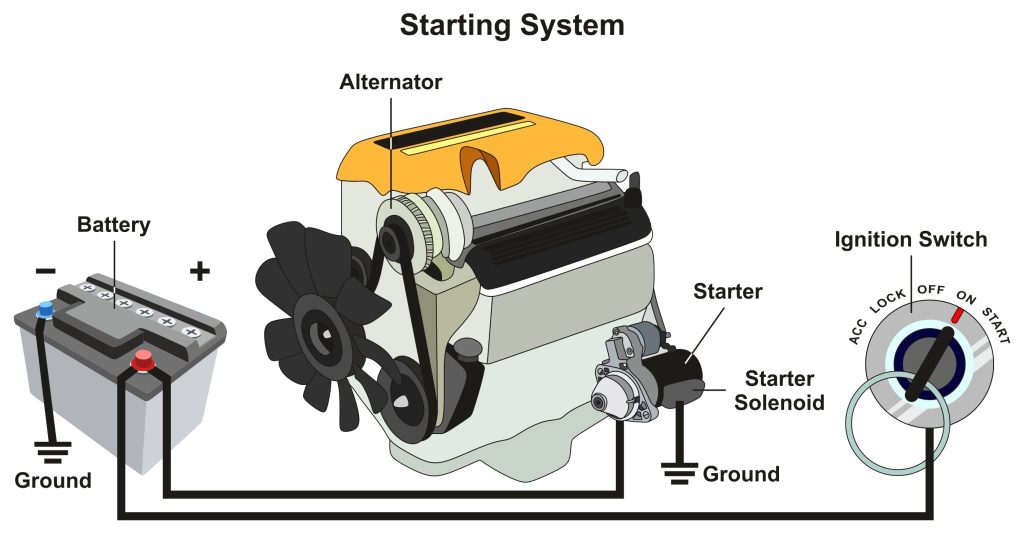
The alternator charger + solar compatibility confirmation: Unlike X-Stream (which disables the DC port), the alternator charger connects through the XT60 DC/solar input. A second solar panel through an MC4 parallel branch on the same XT60 input adds its wattage to the alternator charger’s output. The MPPT controller manages both sources simultaneously.
Important hardware note: With 800W turbo alternator, top up your energy storage 8 times faster than using a traditional car 12V outlet. Outbound Power The 800W requires the XT150 cable (included with the 800W alternator charger). Using XT60 caps both the 500W and 800W models at 500W — the cable choice determines whether you get 500W or 800W output.
Best for: Van lifers, overlanders, anyone making a 1–2 hour drive between locations.
Method 5: 800W Alternator Charger Only
The essential method for van life and road trips — charging your DELTA 2 while driving.
Without the solar supplement, the standalone EcoFlow Alternator Charger at 800W is still dramatically faster than any other mobile charging option. For how to charge Delta 2 while driving, this is the primary answer.
You are limited to 8A as you can see even with the bench supply set at 10A — this is set in the app and can’t be increased, only lowered. I did increase the voltage all the way up to 60V and charged the unit at 480W — still limited to 8A. Solar Power Supply
This limitation applies to the standard car port — not the alternator charger. The EcoFlow Alternator Charger bypasses the 8A car port restriction by connecting directly to the vehicle battery terminals at much higher current capacity through the XT150 port.
DELTA 2 charging via 800W Alternator Charger:
| Scenario | Drive Time | Energy Restored | DELTA 2 % Filled |
|---|---|---|---|
| 30-min urban commute | 30 min | ~360Wh | 35% |
| 1-hour highway drive | 60 min | ~720Wh | 70% |
| 1.5-hour road trip leg | 90 min | ~1,024Wh | ~100% |
| 2-hour interstate run | 120 min | ~1,440Wh | Full + surplus |
The daily commuter math: The average US commute is 26 minutes each way — 52 minutes total daily. At 800W alternator input: ~624Wh restored per commute day. If your average daily DELTA 2 consumption is under 624Wh (easily achievable for device charging, laptop, router, and lighting), your commute alone keeps the DELTA 2 full indefinitely.
For road trippers: A 1.5-hour drive between stops fully restores a depleted DELTA 2. Pull into the next campsite with a full battery every single time.
EcoFlow app integration while driving: The EcoFlow app displays real-time charging wattage, estimated time to full, and battery temperature — all accessible through Apple CarPlay and Android Auto without touching your phone. This is the first infotainment-integrated portable power management system available in any consumer charging product.
Best for: Van lifers, road trippers, anyone making drives over 90 minutes between charging locations.
Method 6: 500W Alternator Charger
The budget mobile charging option — same concept, slower speed.
The 500W alternator charger delivers the same functionality as the 800W model through the XT60 port at lower output. For RIVER series owners or third-party station users, the 500W model is the appropriate choice. For how to charge Delta 2 while driving specifically, the 800W is worth the extra $100 — it saves 60 minutes per full charge.
Comparison:
| Method | Input | 0–100% Time | Price |
|---|---|---|---|
| 800W Alternator Charger | 800W | ~90 min | ~$249–$299 |
| 500W Alternator Charger | 500W | ~2.3 hrs | ~$149–$179 |
| Time saved with 800W | +300W | ~60 min faster | +~$100 |
For van lifers making multiple moves per week, the 800W model saves approximately 5+ hours of drive time per month versus the 500W. At any reasonable valuation of your time, the $100 premium pays back quickly.
Method 7 & 8: Solar Charging — The Off-Grid Workhorse
The only method that charges for free. The best method for stationary off-grid use.
With up to 500W of solar panel input, DELTA 2 is a solar generator that can be charged while camping, on an RV trip or off-grid. DIY Solar Forum
The DELTA 2’s solar input accepts 11–60V at 13A maximum through the XT60 port — the same port as the car and alternator charger inputs. The MPPT controller operates at >98% efficiency, meaning it extracts maximum available power from whatever panel configuration you connect.
Solar charging times by panel configuration:
| Panel Setup | Peak Input | 0–80% Time | 0–100% Time | Real-World Multiplier |
|---|---|---|---|---|
| 1× 400W EcoFlow panel | ~340–380W | ~3 hrs | ~3.5 hrs | +25% = ~4.4 hrs |
| 2× 220W panels parallel | ~380–440W | ~3 hrs | ~3.5 hrs | +25% = ~4.4 hrs |
| 1× 220W Bifacial panel | ~185–200W | ~5.5 hrs | ~6.5 hrs | +25% = ~8 hrs |
| 1× 160W panel | ~135–150W | ~7.5 hrs | ~9 hrs | +30% = ~11.7 hrs |
| 1× 110W panel | ~90–100W | ~11 hrs | ~13 hrs | +30% = ~17 hrs |
With its MPPT smart algorithm, DELTA 2 can actively detect the voltage and current in real-time to reach the maximum power point with >98% efficiency. That means a more efficient charge than other brands. DIY Solar Forum
The solar voltage rule: Before connecting any panel, verify the open circuit voltage (Voc) stays between 11V and 60V. A single 400W panel (Voc ~48V) is safe. Two panels in series (~80–96V) exceeds the 60V limit and risks damaging the MPPT controller permanently. For two panels, wire in parallel — same voltage, doubled current — not in series.
Panel pairing optimization for maximum DELTA 2 solar speed:
| Goal | Panel Choice | Why |
|---|---|---|
| Fastest charge (budget) | 1× 400W EcoFlow | Hits 500W limit with one panel |
| Best portability | 2× Jackery SolarSaga 200W | Foldable, 24.3% efficiency |
| Best for low light | EcoFlow 220W Bifacial | Captures rear reflected light |
| Roof van deployment | 2× 200W rigid panels parallel | Permanent, weatherproof |
Solar + alternator stacking while driving (recap from Method 4): A roof-mounted or window-deployed panel adds 100–200W of real-world solar input to the alternator charger’s 800W — pushing combined input to 900–1,020W for the drive duration.
Method 9: USB-C PD 100W Input
The emergency travel method. Slow but surprisingly useful when it’s all you have.
The DELTA 2’s USB-C ports are bidirectional — they output at 100W and accept input at 100W. Below the display is a series of USB ports. There are two USB-C ports with 100W output. Ecoflow
Independent testing confirmed 100W USB-C input works reliably: The EcoFlow Delta 2 has two 100W USB power delivery outputs, and a 1024Wh long lasting LiFePO4 battery. Solar Power Supply
USB-C charging specs:
- Input: 5/9/12/15/20V, 5A = 100W max
- 0–100% time: ~11.4 hours
- Best charger: GaN 100W USB-C PD adapter (Anker, Baseus, or similar)
Where USB-C input genuinely saves you:
- Hotel room with only USB-C outlets and no standard AC outlets
- Airport lounge USB-C charging stations during a layover
- MacBook charger doing double duty — charge your laptop and slowly top up the DELTA 2 overnight
- International travel with a USB-C-based travel adapter as the only connection
It’s not fast. But at 11.4 hours of USB-C charging, an overnight hotel stay takes you from 0% to 85% using nothing but a $30 USB-C GaN charger. That’s a legitimate field-expedient solution for travelers.
Method 10: 12V Car Cigarette Lighter Port
The included method. Also the slowest method. Know exactly when to use it — and when not to.
The EcoFlow Delta 2 includes a car charging cable designed for a 12V cigarette lighter-style outlet. To do this, start your vehicle so the alternator is running, insert the cable into your vehicle’s port, and plug the other end into the EcoFlow’s designated XT60 car input. Charging via car typically takes much longer than wall power, usually in the 8 to 12-hour range. EcoFlow
Independent testing confirmed the actual numbers: The unit charges at around 100W with the supplied cable via a 12V car outlet. So a full charge would take over 10 hours. You also charge faster if your car has a 24V output, which I confirmed with my bench power supply charging the Delta 2 at 192W. You are limited to 8A as you can see even with the bench supply set at 10A — this is set in the app and can’t be increased, only lowered. Solar Power Supply
The 8A current limit is critical to understand:
| Vehicle Type | Voltage | 8A Current | Input Power | 0–100% Time |
|---|---|---|---|---|
| Standard passenger car | 12V | 8A | ~100W | ~11.5 hours |
| 24V commercial truck | 24V | 8A | ~192W | ~6 hours |
| Custom high-voltage DC (tested) | 60V | 8A | ~480W | ~2.5 hours |
The 8A limit is enforced by the app and cannot be increased through software settings — only decreased. This is a safety feature protecting both the DELTA 2’s BMS and your vehicle’s electrical system.
When the 12V car outlet is actually the right choice:
- Short top-up during a 2–3 hour drive when you only need 20–30% restored
- Vehicle doesn’t have a compatible alternator for the alternator charger
- You already own the included cable and don’t need to buy anything
- Trickle maintenance charging during extended parking (airport long-term lots, etc.)
When it’s the wrong choice:
- Anytime you need a full charge and the drive is under 10 hours
- When you own or can borrow a EcoFlow Alternator Charger (always use that instead)
- When you have a 12V vehicle and need meaningful charge — it simply can’t deliver it at useful speed
The Complete Stack Guide: Combining Methods for Maximum Speed
This is the section that separates informed DELTA 2 users from everyone else. Certain method combinations are possible. Others aren’t. Here’s the definitive guide to simultaneous EcoFlow DELTA 2 charging stacks.
What Can Stack (Confirmed Working)
Stack A — The Stationary Maximum (1,700W):
X-Stream AC port → 1,200W
+ XT60 solar port → 500W (2× 220W panels)
= ~1,700W total → ~38 min to full
Activate via EcoFlow app “Prioritize Solar” setting.
Stack B — The Mobile Maximum (1,020W):
800W Alternator Charger → 800W (XT150 cable)
+ Roof solar panels → 220W (MC4 to XT60 branch)
= ~1,020W total → ~62 min while driving
Both connect through the XT60 port via parallel MC4 branch.
Stack C — The Emergency Minimum (200W):
USB-C PD → 100W (one USB-C port)
+ 12V car outlet → 100W (XT60 DC port)
= ~200W total → ~5.7 hrs
Available when no alternator charger is present; provides meaningful charge over a 6-hour drive.
What Cannot Stack (Confirmed Not Working)
X-Stream + Car/DC port: I tried charging by mains at the same time as DC input, but this isn’t possible — it switches across to mains charging. Solar Power Supply The DELTA 2 automatically disables the XT60 DC input when X-Stream AC is connected. Solar is the workaround.
Alternator Charger + X-Stream simultaneously: Not possible for the same reason — the XT60 port is disabled when X-Stream is active. The correct high-speed stack uses X-Stream + solar (stationary) or alternator + solar (mobile), never X-Stream + alternator.
Charging the DELTA 2 Extra Battery: What Changes
The EcoFlow Delta 2 Extra Battery (1,024Wh) doubles your system to 2,048Wh when attached. Charging behavior changes significantly:
Part of an ever-growing ecosystem. DELTA 2 is just the start. Link with a wide variety of EcoFlow products such as portable solar panels, extra batteries and so much more. DIY Solar Forum
Charging times with DELTA 2 Extra Battery attached (combined 2,048Wh system):
| Method | Input | Combined System 0–80% | Combined System 0–100% |
|---|---|---|---|
| X-Stream AC only | 1,200W | ~100 min | ~160 min |
| X-Stream + 500W solar | 1,700W | ~72 min | ~115 min |
| 800W Alternator Charger | 800W | ~2.6 hrs | ~3 hrs |
| 800W Alternator + 220W solar | 1,020W | ~2.1 hrs | ~2.4 hrs |
| 500W solar only | 500W | ~4.1 hrs | ~5.5 hrs |
Key insight: With the DELTA 2 Extra Battery attached, X-Stream + solar stack is even more valuable — cutting the 160-minute full-charge time to approximately 115 minutes, which is faster than X-Stream alone on the base unit compared to the combined capacity.
EcoFlow App Charging Settings: The Controls Most Owners Never Open
The EcoFlow app provides more DELTA 2 charging control than most users realize. These settings directly affect charging speed, battery health, and noise level.
AC Charging Speed (X-Stream throttle): Navigate to: EcoFlow app → Device → Settings → AC Charging Speed
- Range: 200W–1,200W (adjustable in app)
- Why reduce it: Quieter fan operation, lower heat, shared circuit safety
- When to maximize: Pre-trip charging, time-critical prep
Solar Priority Setting: Navigate to: EcoFlow app → Device → Settings → Input Priority
- Options: “Grid Priority” or “Solar Priority”
- Solar Priority: actively accepts solar even when AC is connected — enables the Stack A combo
- Grid Priority: AC dominates, solar may be de-emphasized (default setting)
Charge Upper Limit: Navigate to: EcoFlow app → Device → Settings → Charge Limit
- Range: 50%–100%
- 80% limit: Extends LiFePO4 cell life for daily cycling scenarios
- 100%: Use before camping trips or outages when full capacity needed
Standby Timer: Navigate to: EcoFlow app → Device → Settings → Standby
- Prevents auto-shutoff during slow overnight charging sessions (USB-C or solar)
- Set to “Never” when charging at low wattage that might trigger premature shutoff detection
EcoFlow app CarPlay/Android Auto Integration: When using the EcoFlow Alternator Charger, the EcoFlow app displays on your vehicle’s infotainment screen — showing real-time wattage input, battery percentage, and estimated time to full without requiring you to look at your phone. This is available for both the 500W and 800W alternator charger models.
Audience-Specific Charging Blueprints
For Van Lifers: The “Never Empty” Daily System
The goal: DELTA 2 stays above 80% at all times regardless of campsite electrical availability.
Hardware:
- EcoFlow 800W Alternator Charger (~$249–$299)
- 2× 200W rigid roof panels (~$400)
- EcoFlow DELTA 2 + Extra Battery for 2,048Wh total (~$900–$1,100)
Daily charging workflow:
- Driving: 800W alternator + 200W roof solar = ~1,000W combined → restores ~55Wh per minute driven
- Parked sunny: 400W roof solar → restores ~300Wh/hour
- Parked cloudy: 400W roof solar (reduced) → restores ~80–150Wh/hour
- RV park hookup: X-Stream AC → full charge in 80 minutes
Result: A van lifer who drives 30+ minutes daily and has adequate roof solar maintains a full 2,048Wh system indefinitely in most US locations without ever using a campsite electrical hookup.
For Overlanders: The “One Drive to Full” Expedition Setup
The goal: Every drive between waypoints fully restores the DELTA 2, regardless of campsite power.
Hardware:
- EcoFlow 800W Alternator Charger
- 1× 220W foldable panel (deploys at camp, stores for driving)
- EcoFlow DELTA 2 base unit (1,024Wh sufficient for single-night use)
Charging blueprint:
- Camp night consumption: ~500–700Wh (lighting, CPAP, device charging, Wave 3 cooling)
- Next morning driving (90 min): 800W alternator alone → full charge restored
- If parked during day: Foldable 220W panel → adds 150–180Wh/hour
Key insight for overlanders: The 800W alternator charger transforms every drive segment into a charging session. A typical 2-hour trail approach fully restores the DELTA 2 before you reach camp — arriving with full power every time.
For Road Trippers: The “Charge at Every Stop” Optimization
The goal: Maximize DELTA 2 charge during normal road trip driving and hotel stops without any additional hardware purchase.
With only included equipment (no additional purchase):
| Stop Type | Method | Hours Available | Charge Gained |
|---|---|---|---|
| Driving (any duration) | 12V car outlet | 6 hrs | ~600Wh (59%) |
| Hotel room (overnight) | X-Stream AC | 1.3 hrs to full | 100% |
| Rest stop with outlet | X-Stream AC | 30 min | ~60% |
| Coffee shop with USB-C | USB-C 100W | 2 hrs | ~18% |
With 800W Alternator Charger added (~$249):
| Driving Time | Method | Charge Gained |
|---|---|---|
| 30-min gas station leg | 800W Alternator | +35% |
| 1-hr highway segment | 800W Alternator | +70% |
| 1.5-hr drive | 800W Alternator | ~Full |
For road trippers, the 800W alternator charger pays for itself in trip convenience within a single multi-day journey — eliminating the need to find campsite hookups or wait at charging locations.
Quick-Reference: Right Method for Every Situation
| Situation | Best Method | Time to Full |
|---|---|---|
| Home overnight prep | X-Stream AC | 80 min |
| Maximum speed at shore power | X-Stream + Solar stack | ~58 min |
| Driving (have alternator charger) | 800W Alternator + roof solar | ~67 min |
| Driving (no alternator charger) | 12V car outlet | ~11.5 hrs (plan accordingly) |
| Off-grid, sunny day, 2 panels | 500W solar | ~3.5 hrs |
| Off-grid, sunny day, 1 panel | 220W solar | ~6.5 hrs |
| Hotel room, no AC outlet | USB-C 100W overnight | ~85% by morning |
| Extended blackout, no solar | Smart Generator | ~40 min |
| Emergency top-up, 30-min drive | 12V car or alternator | 35% (alt) or 3% (car) |
Frequently Asked Questions
What is the fastest way to charge the EcoFlow DELTA 2?
The fastest single method is EcoFlow X-Stream AC charging — charge from 0–80% in 50 mins, that’s 7× faster than other power stations on the market. Outbound Power The fastest combined method is X-Stream AC (1,200W) stacked simultaneously with 500W of solar panels (1,700W total) — reaching full charge in approximately 38–58 minutes. Enable “Solar Priority” in the EcoFlow app to activate simultaneous X-Stream + solar input.
How to charge Delta 2 while driving without an alternator charger?
Without the EcoFlow Alternator Charger, your only mobile option is the included 12V car outlet cable. Charging via car typically takes much longer than wall power, usually in the 8 to 12-hour range. EcoFlow At ~100W input through a 12V cigarette lighter, charging a DELTA 2 from empty takes approximately 11.5 hours. This is why the EcoFlow Alternator Charger — delivering 800W versus 100W — is the most impactful single accessory purchase for mobile DELTA 2 users.
How many watts does the DELTA 2 accept for solar input?
With up to 500W of solar panel input, DELTA 2 is a solar generator that can be charged while camping, on an RV trip or off-grid. DIY Solar Forum The DELTA 2 accepts a maximum of 500W through its XT60 solar port (11–60V, 13A). Panels must be wired in parallel (not series) to stay within the 60V voltage limit. Two 220W panels in parallel, or one 400W panel, both approach the 500W maximum.
Can I charge the DELTA 2 with USB-C?
Yes. The DELTA 2’s USB-C ports are bidirectional, accepting up to 100W of USB-C PD input. USB-C Output: 2 ports, 5/9/12/15/20V, 5A, 100W Max. Ecoflow At 100W input, a full charge from 0% takes approximately 11.4 hours — slow but viable for overnight hotel charging when no AC outlet is accessible.
Can I charge the DELTA 2 from solar and AC at the same time?
Yes — solar through the XT60 port can stack with X-Stream AC charging simultaneously. Customize AC or solar input for backup power or energy savings. Prioritize solar energy via the EcoFlow app when using X-Stream AC + solar dual charging. EEVblog Enable “Solar Priority” in the EcoFlow app settings to ensure both inputs are actively used. Combined input of up to 1,700W cuts charge time to approximately 38–58 minutes.
Can I use the alternator charger and X-Stream simultaneously?
No. I tried charging by mains at the same time, but this isn’t possible — it switches across to mains charging. The same applies if you use solar panels via the DC input. Solar Power Supply The DELTA 2 disables the XT60 DC/solar input when X-Stream AC is active. The correct high-speed stack for stationary use is X-Stream + solar (not X-Stream + alternator charger). For mobile use, the alternator charger + solar is the correct stack.
How does the EcoFlow app control charging speed?
The EcoFlow app’s AC Charging Speed setting allows you to throttle X-Stream input from 200W to the full 1,200W maximum. Reducing speed lowers fan noise (useful for bedroom/tent overnight charging), reduces heat in high ambient temperatures, and prevents circuit overload when sharing a 15A household outlet with other appliances. The app also controls the Charge Upper Limit (set to 80% for daily use to extend LiFePO4 battery life) and the Solar Priority toggle for simultaneous AC + solar charging.
How does charging change with the DELTA 2 Extra Battery attached?
With the EcoFlow Delta 2 Extra Battery (1,024Wh) attached, the combined system is 2,048Wh. All charging methods take approximately twice as long to fill the combined system as they take for the base DELTA 2 alone. X-Stream alone: ~160 minutes. X-Stream + 500W solar stack: ~115 minutes. 800W alternator charger: ~3 hours driving. The Extra Battery charges simultaneously with the main unit — no sequential charging required.
Is the 800W alternator charger worth the price over the 500W model?
For DELTA 2 users specifically, yes. The 800W model charges at 800W (via XT150 cable) versus 500W — saving approximately 60 minutes per full charge cycle. For a van lifer making multiple moves per week, this saves 4–6 hours of drive time monthly. At any reasonable time valuation, the ~$100 price premium recovers within the first month of regular use. For RIVER series users or third-party stations (which use XT60 and cap both models at 500W), the 500W model is the appropriate choice.
UnitVerseHQ provides independent technical guides for portable power users. All specifications cited from EcoFlow’s official US product pages, Amazon listings, the EcoFlow DELTA 2 user manual, AppleInsider, and The Technology Man’s independent testing. Real-world charging times vary based on ambient temperature, cable quality, vehicle alternator output, and solar conditions — add 15–30% to calculated times for field-condition estimates. Always verify solar panel voltage compatibility (11–60V max) before connecting to the DELTA 2’s XT60 port.